 Listicle
Do Plant-Based Acne Treatments Really Work for Adults?
Last Updated: November 16, 2026
Quick Summary
A plant based acne treatment for adults works best as a complement to, not a replacement for, proven clinical actives. Botanicals can calm inflammation and support the skin barrier, while clinical ingredients clear pores and reduce bacteria, so combining both approaches works well for many adults.
- Tea tree oil has moderate evidence; dilute it to around 5% in a carrier oil.
- Patch test any new botanical on the inner forearm for 48 hours first.
- Add a rinse-off botanical treatment two to three times a week, not nightly.
- Introduce one new product at a time, two to four weeks apart.
- Track progress with photos every two weeks rather than daily mirror checks.
Table of Contents
- Plant-Based vs Clinical Acne Treatments: What Actually Works
- Natural Ingredients for Acne-Prone Skin: An Evidence Grading
- Building an Adult Acne Skincare Routine That Respects Your Barrier
- How Long Does Acne Treatment Take to Work?
- Frequently Asked Questions
Plant-Based vs Clinical Acne Treatments: What Actually Works
A plant based acne treatment for adults works best as a complement to, not a replacement for, proven actives. Botanicals can calm inflammation and support the skin barrier; clinical ingredients can clear pores and reduce bacteria. Many adults find that combining both approaches works well.
This guide grades the evidence honestly, so you can build a routine that respects your skin.
Australian College of Dermatologists acne guidance
The core difference is mechanism. Clinical actives like salicylic acid and adapalene have decades of trial data; plant extracts often have promising but smaller studies.
| Approach | Strength | Limitation | Best For |
|---|---|---|---|
| Plant-based | Soothing, low irritation | Slower, less pore-clearing | Mild acne, sensitive skin |
| Clinical actives | Proven pore clearing | Can dry or irritate | Moderate to persistent acne |
| Combined | Calms and clears | Needs careful layering | Most adult acne |
A common mistake is abandoning botanicals because they are "not clinical." In practice, soothing ingredients make harsh actives more tolerable.
Natural Ingredients for Acne-Prone Skin: An Evidence Grading
"Plant-based" is not a synonym for "proven", "gentle" or "vegan". A plant-derived product can still contain drying alcohol or irritating fragrance. Before buying, ask: is the ingredient plant-derived, is the product vegan-certified, and is there human evidence it improves acne?
How to read the grades
- Moderate: consistent human studies or long clinical use, with a plausible acne mechanism.
- Emerging: small or short human studies, or good lab data without strong trials.
- Soothing only: evidence for calming redness or supporting the barrier, not for clearing pores.
- Limited: traditional use or lab data only; treat claims with caution.
Tea tree oil, moderate evidence, with a dilution rule. Terpinen-4-ol has antibacterial activity against Cutibacterium acnes in laboratory studies. Neat oil commonly causes irritant contact dermatitis, so dilute to around 5% in a carrier oil or choose a formulated product. Patch test on the inner forearm for 48 hours.
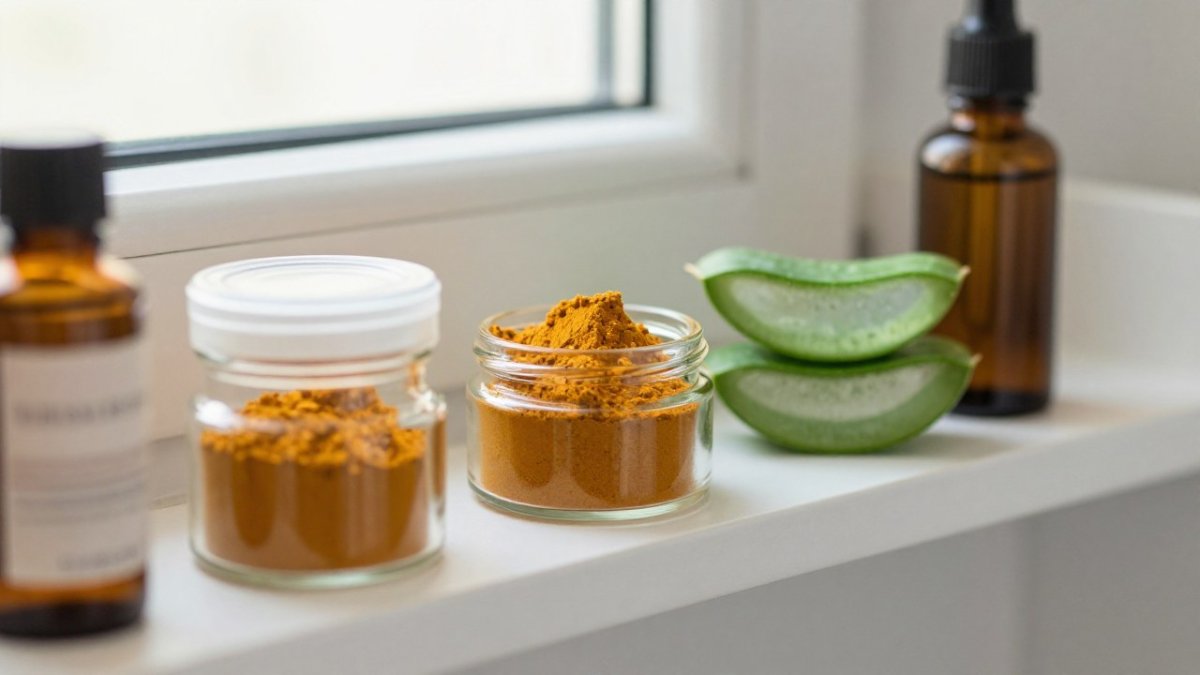
Turmeric (curcumin), emerging. It stains and absorbs poorly as plain powder, so use a rinse-off cleanser or night serum rather than a DIY mask.
Aloe vera, soothing only.
Green tea, emerging. Best in toners and serums for redness-prone skin; not a substitute for a pore-clearing active.
Licorice root, soothing and pigment-focused.
Willow bark, emerging.
Neem, limited.
What the grades mean for your routine. If your acne is moderate, persistent or leaving marks, see a dermatologist or pharmacist about a clinical active rather than adding more products.
Turmeric stains, so use it in a rinse-off formula or at night. If you want to understand what activated charcoal can and cannot do for skin, that breakdown pairs well with this grading.
For a ready-made turmeric option, our turmeric and dila soap bar puts these anti-inflammatory benefits into a simple daily bar.
Building an Adult Acne Skincare Routine That Respects Your Barrier
Adult acne is not teenage acne with a later start date. Hormonal fluctuation, chronic stress, some medications and low-grade inflammation play larger roles, and adult skin is often drier and more reactive. That means fewer actives, more barrier support, and a longer testing window.
A practical morning and evening framework
- Morning: gentle low-pH cleanser (or water if dry) → optional antioxidant serum such as green tea → lightweight non-comedogenic moisturiser → broad-spectrum sunscreen, which matters because UV worsens post-inflammatory marks.
- Evening: cleanser → one treatment active → moisturiser. If you wear sunscreen or makeup, use a separate oil or balm cleanser first.
- Two to three times a week: add a rinse-off botanical treatment (e.g. turmeric or willow bark wash) rather than layering it nightly.
Ingredient compatibility, in plain terms
- Do not layer a botanical essential oil and a retinoid; alternate nights, or use the botanical in the morning and the retinoid at night.
- Salicylic acid and willow bark overlap in mechanism; using both increases irritation without added benefit.
- Aloe, green tea and licorice layer well with most actives and calm redness.
- Introduce one new product at a time, two to four weeks apart.
Safety and patch testing
Patch test any new botanical on the inner forearm for 48 hours, then on a small area of the jawline before full-face use. Dilute essential oils, no more than a few drops per 10 mL of carrier oil for facial use, and avoid citrus oils in daytime products because of photosensitivity. Stop and seek advice if you develop spreading redness, swelling, blistering or a rash that does not settle within a few days.
Watch out: over-cleansing and scrubbing feel like they are helping in the short term but damage the barrier, which can increase oiliness and irritation over weeks.
Adult-specific considerations
- If acne appeared or worsened after starting a medication, raise it with your prescriber rather than treating around it.
- Persistent jawline and chin acne in adults is often hormonal; topicals may not be enough alone.
- Stress and poor sleep are common triggers; a routine you can keep beats an elaborate one you abandon.
A common mistake is layering five actives at once. Pick one, give it weeks, then adjust. For barrier-friendly hydration, these gentle face oils for sensitive skin are worth reading before you add anything new.
Australian Skin and Skin Cancer Research Centre on sunscreen
How Long Does Acne Treatment Take to Work?
Track progress with photos every two weeks rather than daily mirror checks.
If you are waiting on results, you can also start fading acne scars naturally in parallel. And if scarring is deep or persistent, see a dermatologist rather than relying on topicals alone.
Adult acne rarely clears overnight, and the temptation to keep buying new products makes it worse. At Kula Palms, we build 100% natural, herbal-infused skincare around a pure virgin coconut oil base, with raw turmeric and activated charcoal formulations designed to help manage acne and support scar fading. Start simple, stay consistent, and let your skin catch up.
Frequently Asked Questions
What plant-based ingredients may help with adult acne?
Tea tree oil is among the better-studied botanicals for acne. Some people also use green tea, aloe vera, licorice extract, willow bark and turmeric alongside other skincare. Treat these as supportive ingredients rather than replacements for proven actives like salicylic acid or adapalene when acne is moderate to severe.
Can coconut oil make acne worse?
Yes, for some people. Coconut oil can clog pores in some skin types. Adults with oily or acne-prone skin should patch test any virgin coconut oil product on the jawline for two weeks before applying it to the full face. If you notice new blackheads or whiteheads, stop using it.
How long does plant-based acne treatment take to work?
Results from skincare often take several weeks to appear. Take photos in consistent lighting every two weeks so you can track real progress rather than judging by daily fluctuations. If there is no improvement after twelve weeks of consistent use, see a dermatologist.