 Ultimate guide
Charcoal and Turmeric Skincare Benefits 2026
Last Updated: November 23, 2026
Quick Summary
Charcoal and turmeric skincare benefits come down to two different jobs: activated charcoal binds to oil and debris on the skin's surface, while turmeric brings curcumin, a pigment with soothing and brightening properties. Charcoal is best thought of as a cleanser rather than a treatment, and turmeric as a cosmetic brightener rather than a bleaching agent.
- Charcoal absorbs surface oil and grime but cannot unclog pores from the inside or treat cystic acne.
- Limit charcoal to a few times a week for most skin types to avoid over-cleansing.
- Apply a thin layer of prepared turmeric mask and leave it for 5 to 10 minutes.
- Patch test turmeric on the inner arm for 48 hours before first full-face use.
- Give any new product a month of consistent use before judging it.
Table of Contents
- What are the charcoal and turmeric skincare benefits in 2026?
- Activated charcoal benefits for skin
- Turmeric benefits for skin
- Charcoal and turmeric face mask: how to use both together
- Turmeric skincare side effects and safety guidance
- Choosing a charcoal and turmeric product that suits your skin
- Frequently Asked Questions
What are the charcoal and turmeric skincare benefits in 2026?
Charcoal and turmeric skincare benefits come down to two different jobs: activated charcoal binds to oil and debris on the skin's surface, while turmeric brings curcumin, a pigment with soothing and brightening properties that has been used in South Asian and Pacific skincare traditions for generations.
The distinction matters more than most ingredient roundups admit. Charcoal is best thought of as a cleanser rather than a treatment, and turmeric as a cosmetic brightener rather than a bleaching agent. Treat them as a purifying step and a calming step respectively, and the pair makes sense.
Below, we break down how each ingredient actually works, where the evidence is thin, and how to combine them without irritating your skin.
How the two ingredients differ
Activated charcoal is a porous carbon material processed to create millions of tiny internal surfaces, which is why it can adsorb oil, dirt and some surface impurities. Turmeric is a rhizome whose active compound, curcumin, is an antioxidant and pigment with a long history in traditional medicine.
One is physical. The other is botanical.
Charcoal works in minutes and rinses away. Turmeric needs contact time and repeated use to make any visible difference to tone.
Activated charcoal benefits for skin
Activated charcoal's main skincare benefit is cleansing: it lifts excess oil and surface residue from the skin.
What charcoal can and cannot do for pores and oil
- Can do: absorb surface oil, help remove sunscreen and city grime, leave oily skin feeling fresher
- Cannot do: unclog a blocked pore from the inside, treat cystic acne, fade scars
For a deeper look at where the ingredient's limits sit, read our guide on why use activated charcoal for skin.
Turmeric benefits for skin
Turmeric's skincare benefits are often associated with curcumin's antioxidant and soothing activity. It is a cosmetic ingredient, not a dermatological treatment.
If you want turmeric in a targeted format for dark spots and hyperpigmentation, our brightening balm for dark spots pairs turmeric with tamanu oil and tea tree oil in a virgin coconut oil and beeswax base.
Curcumin, brightening and the limits of the evidence
Curcumin is the yellow pigment in turmeric. The evidence base for skin use is mostly laboratory and small-scale, and much of it concerns oral curcumin rather than topical creams.
Judge it as you would any botanical cosmetic, and give it a reasonable period of consistent use before deciding.
Charcoal and turmeric face mask: how to use both together
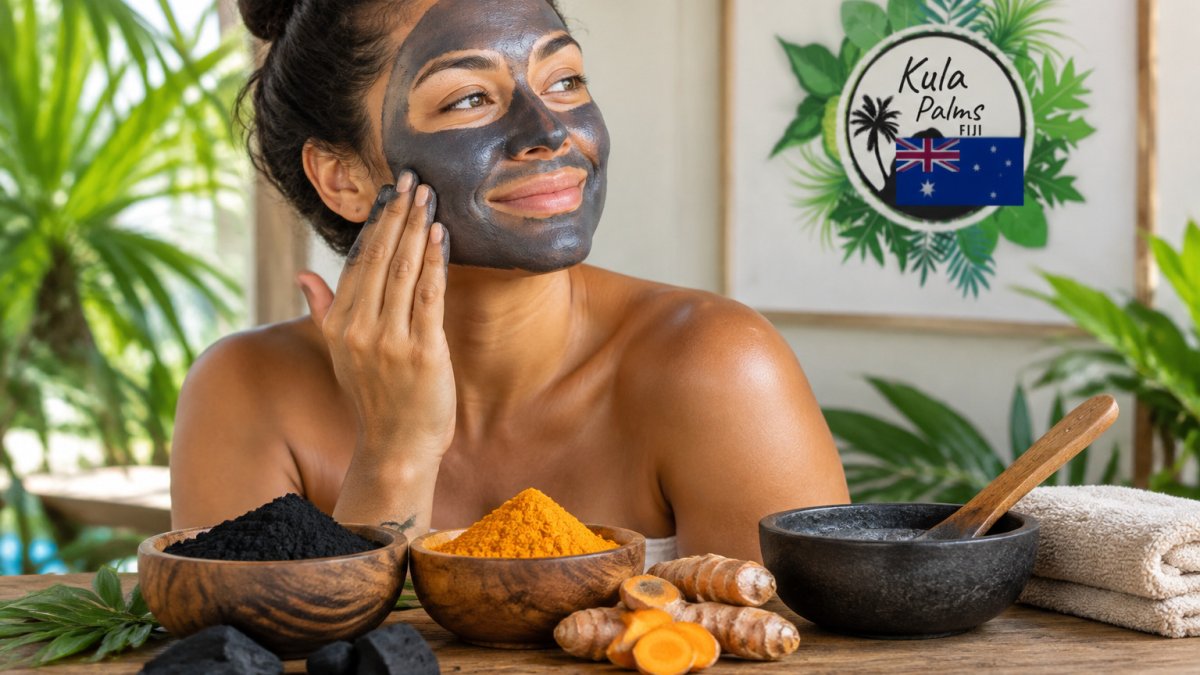
Charcoal and turmeric are often presented as competing choices, but you can use both in one routine if you respect their different roles. The key is to separate the cleansing step from the brightening step, and to avoid over-cleansing by limiting charcoal to a few times a week for most skin types.
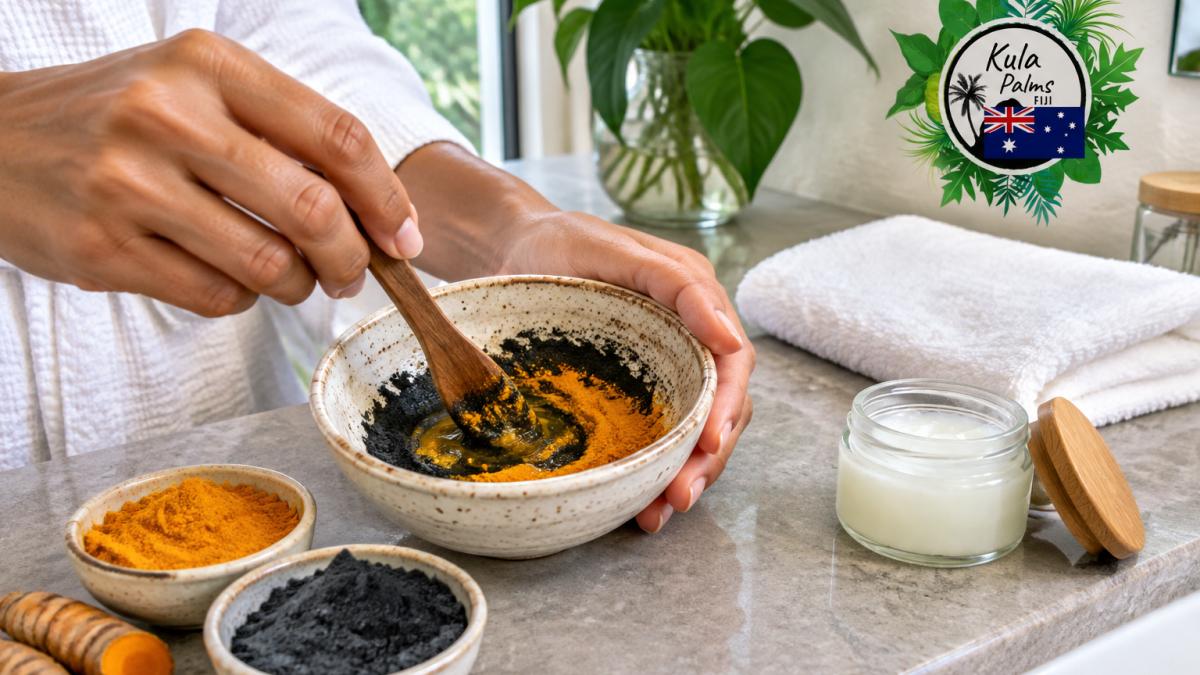
A practical weekly sequence that works for most people:
- Cleanse with an activated charcoal soap or cleanser and pat dry. Use lukewarm water, not hot.
- Apply a thin layer of a prepared turmeric mask or balm. Avoid raw turmeric powder, which is difficult to dose and more likely to stain or irritate.
- Leave for 5 to 10 minutes. Do not let it dry to a crack; that signals it is time to rinse.
- Rinse thoroughly with lukewarm water and follow with a light moisturiser while the skin is still slightly damp.
If you want both ingredients in one bar, our charcoal and turmeric soap bar is formulated for exactly this kind of routine. But even with a combined product, treat it as a cleanser, not a leave-on treatment.
Watch out: raw turmeric powder mixed at home can stain skin and towels.
Matching the routine to your skin type
- Oily and acne-prone skin: charcoal cleanser daily, turmeric mask once or twice weekly. If the skin feels tight after cleansing, reduce charcoal to every other day.
- Dry skin: charcoal two to three times weekly only, and always follow with a richer moisturiser. Turmeric once a week is enough for most dry skin types.
- Sensitive skin: patch test turmeric on the inner arm for 48 hours first. Start with a once-weekly turmeric mask and avoid combining it with charcoal on the same day.
- Combination skin: charcoal on the T-zone, turmeric across the full face, but keep the turmeric layer thin on oily areas.
A common pattern is to overdo the charcoal in the first week because it feels effective.
Turmeric skincare side effects and safety guidance
Turmeric can cause contact irritation, and it temporarily stains skin and fabric yellow. People with sensitive skin, eczema or psoriasis should patch test before regular use, and anyone with a known allergy to ginger-family plants should avoid it.
The staining question comes up constantly. Our dedicated answer on whether turmeric stains skin permanently covers how long it lasts and how to lift it.
A few practical rules:
- Patch test for 48 hours before first full-face use
- Avoid raw powder on broken or blistered skin
- Keep turmeric away from white towels and light clothing
- Stop use if itching, redness or swelling appears
If a reaction does not settle within a few days, see a pharmacist or doctor.
Choosing a charcoal and turmeric product that suits your skin
Two products with the same actives can perform very differently depending on concentration, product type, contact time and supporting ingredients.
Start with your primary concern, not the ingredient list. If oil and congestion lead, buy the charcoal product. If dullness and marks lead, buy the turmeric one. Only buy a combined product if you want a single-step routine and your skin is not easily irritated.
Check these four things before you buy:
- The base: virgin coconut oil suits most skin but is heavy for very oily types. If you are prone to congestion, look for a lighter base or use the product as a short-contact cleanser rather than a leave-on.
- The form: bar soap for cleansing, balm or cream for leave-on brightening. Rinse-off products have limited contact time, so do not expect the same results as a leave-on treatment.
If you are stocking up, our coconut and charcoal soap pack covers the cleansing side of the routine in one purchase.
| Ingredient | Main benefit | Best for | Common forms |
|---|---|---|---|
| Activated charcoal | Cleansing, oil control | Oily, congested skin | Bar soap, cleanser |
| Turmeric (curcumin) | Brightening, soothing | Dull, uneven skin | Balm, mask, soap |
Realistic expectations and evidence quality
Separate established evidence from traditional use and marketing claims. Charcoal's cleansing action is a surface effect, and claims that it 'draws out toxins' or 'deep-cleans pores' go beyond what the ingredient can do. Turmeric has a long history of traditional use, and topical curcumin is not a proven treatment for melasma or post-inflammatory pigmentation.
Give any new product a month of consistent use before judging it, and stop if irritation appears. If you have a persistent skin concern, see a pharmacist or doctor rather than relying on cosmetic ingredients alone.
Frequently Asked Questions
Can you use activated charcoal and turmeric together on your face?
Yes, they can be used together, and many charcoal and turmeric skincare products combine both. The sensible approach is a short-contact mask once or twice a week rather than daily use, followed by a plain moisturiser. Patch test first on the inner forearm for 24 hours, especially if your skin is dry, sensitive or eczema-prone, because charcoal can feel drying and turmeric can irritate some people.
Is charcoal or turmeric better for acne-prone skin?
They do different jobs, so neither is strictly better. Activated charcoal is mainly used for cleansing the skin's surface, and turmeric is generally used as a supporting ingredient. For acne-prone skin, use charcoal in a wash-off cleanser and treat turmeric as a supporting ingredient. Persistent acne needs a doctor or dermatologist, not a natural product alone.
Does turmeric help brighten skin or fade the appearance of scars?
Curcumin is the compound most often studied in turmeric. Realistic expectations matter: most evidence is small-scale, and no natural ingredient fades scars quickly. Think in months, not weeks, and use sun protection daily, because UV exposure is what keeps pigmentation and dark spots visible. If a scar or spot changes shape, colour or bleeds, see a doctor rather than treating it at home.
Can turmeric stain your skin, and should you patch test first?
Yes to both. Raw turmeric can leave a yellow tint on skin and clothing, particularly on pale skin and with high concentrations or long contact time. Rinse thoroughly with lukewarm water, avoid your lightest towels, and keep contact time short. Patch testing is the other essential step: apply a small amount to the inner forearm, leave it 24 hours and check for redness, itching or swelling. Stop using it if irritation appears, and speak to a pharmacist or doctor if a reaction does not settle.