 How-to
7 Natural Skincare Habits for Psoriasis Flare-Ups
Last Updated: November 22, 2026
Quick Summary
Natural skincare for psoriasis flare ups works best as a simple, repeatable routine that protects the skin barrier daily. Cleanse briefly with lukewarm water and a mild fragrance-free wash, then apply a thick cream or ointment to damp skin within three minutes, morning and night.
- Keep showers under ten minutes and skip scrubs or flannel mitts over plaques.
- Moisturise within three minutes of patting dry while skin is still damp.
- Ointments are the most occlusive and suit very dry or cracked plaques.
- Patch test new products on the inner forearm and wait 48 hours.
- Keep a daily diary for two to four weeks to spot flare triggers.
Table of Contents
- Building a Psoriasis Skincare Routine That Calms Flares
- How to Soothe Itchy Skin Fast Without Irritating Plaques
- Coconut Oil for Psoriasis: What It Can and Cannot Do
- Natural Ingredients Worth Trying and the Ones to Avoid
- Psoriasis Flare-Up Triggers You Can Actually Control
- When Home Care Is Not Enough
- Choosing Your Natural Skincare for Flare-Prone Skin
- Frequently Asked Questions
Building a Psoriasis Skincare Routine That Calms Flares
Psoriasis is a chronic immune condition that speeds up skin cell turnover, causing thick, scaly plaques that itch and crack (Psoriasis). Natural skincare for psoriasis flare ups works best as a simple, repeatable sequence, not a shelf of products. The routine below is built around protecting the skin barrier every day, with a slightly different emphasis when a flare is active.
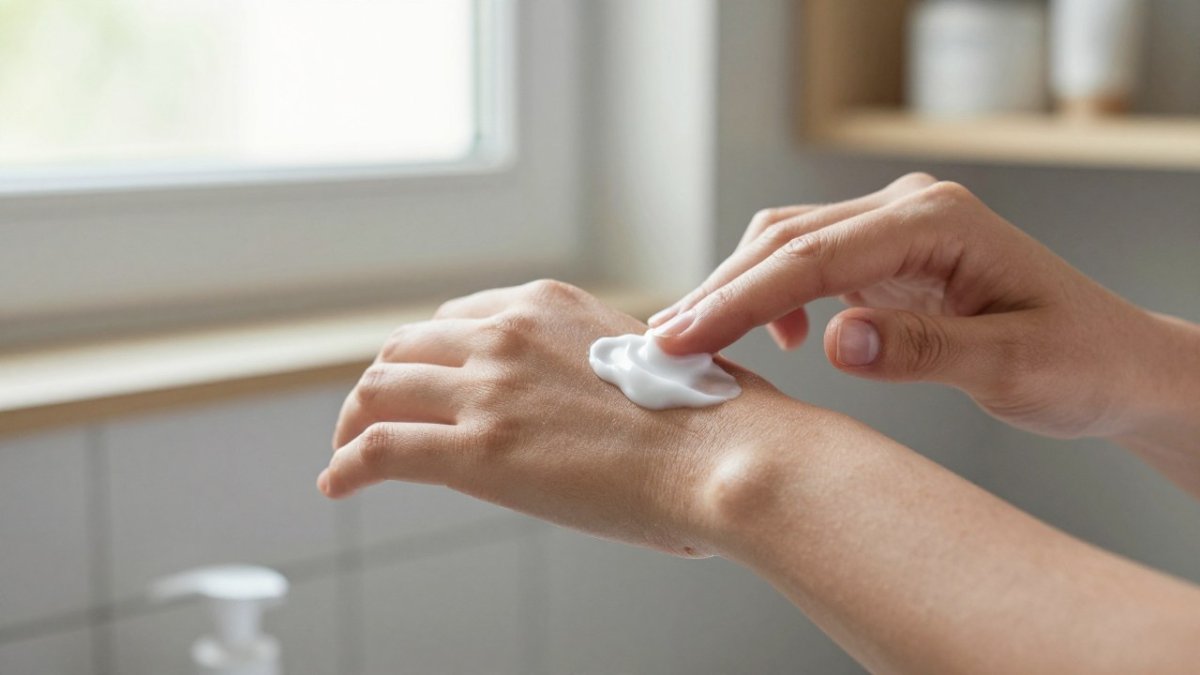
Morning: Cleanse Briefly, Then Moisturise
Use lukewarm water and a mild, fragrance-free cleanser. Keep showers under ten minutes and skip the flannel or scrub mitt over plaques. Pat dry with a soft towel instead of rubbing, then apply a thick cream or ointment within three minutes while the skin is still damp. Damp skin holds moisture better, and fragrance-free products sting less on cracked plaques. Use more product than feels necessary, especially on elbows, knees and the scalp margin.
Bathing: Make the Soak Do Some Work
A short lukewarm bath can soften scale before you moisturise. Colloidal oatmeal is a commonly used addition to bath routines. Avoid bubble bath, bath bombs and heavily fragranced oils. If you use a medicated shampoo or coal-tar preparation, follow the label and keep it off broken skin unless your doctor or pharmacist has advised otherwise.
Evening: Seal, Protect and Repeat
Lock in moisture morning and night, even on clear days. Keep a plain moisturiser by the sink and reapply after every wash. Consistency matters more than any single ingredient. During an active flare, apply the thickest product you tolerate at night and consider a plain ointment over cracked areas to reduce water loss.
Choose the Right Format, Not Just the Right Ingredient
Formulation decides how well a product holds moisture. Ointments are the most occlusive and suit very dry or cracked plaques; thick creams are easier to spread over larger areas; lotions are the least occlusive and better for hairy or sweaty areas. Cleansers should be fragrance-free and low-foaming. Look for short ingredient lists and avoid alcohol as a main ingredient.
| Step | What to Do | How Often |
|---|---|---|
| Cleanse | Lukewarm water, mild fragrance-free wash, under 10 minutes | Daily |
| Bathe (optional) | Lukewarm colloidal oatmeal soak, 10 minutes | 2-3 times weekly during a flare |
| Moisturise | Thick cream or ointment on damp skin within 3 minutes | Twice daily |
| Seal and protect | Reapply after washing, cover dry patches | As needed |
Watch out: applying a new product to cracked or bleeding skin can cause stinging and raise the risk of irritation or infection, patch test on intact skin first and keep products off open areas until they heal.
How to Soothe Itchy Skin Fast Without Irritating Plaques
The fastest safe relief comes from cooling and moisture, not scratching. A cool compress held on the itch for five to ten minutes calms irritation. Follow with a thick moisturiser to seal the skin.
Some people find colloidal oatmeal baths comfortable for scaling and discomfort. Use lukewarm water, soak for ten minutes, then moisturise straight away. Epsom salts suit some skin types but can dry others, so test a small area first.
For a fuller plan, see our guide on how to soothe itchy skin fast. It walks through each step in more detail.
Coconut Oil for Psoriasis: What It Can and Cannot Do
Coconut oil is a moisturiser, not a cure. Many people use it as a moisturiser on damp skin. It will not slow the immune response behind psoriasis.
The limits matter. Some people find coconut oil clogs pores or triggers breakouts, so patch test first if you are prone to acne. Keep it off cracked skin until it has healed.
If you want to try it, our guide on how to buy organic coconut oil for skincare explains what to look for.
Natural Ingredients Worth Trying and the Ones to Avoid
Aloe vera, colloidal oatmeal, allantoin and chamomile are gentle botanical ingredients that many people choose for their skin. Turmeric is a traditional botanical ingredient in many skincare formulas.
Avoid strong fragrances, alcohol-based toners and anything that stings on application.
Patch Testing Before You Commit
Apply a small amount to the inner forearm and wait 48 hours. Check for redness, swelling or itching. Test one new product at a time so you know what caused a reaction. This step matters most for children and anyone with sensitive skin.
If you want to try botanical formulas, our turmeric and dilo soap bar and noni soap bar are built on a pure virgin coconut oil base.
Psoriasis Flare-Up Triggers You Can Actually Control
Some triggers are yours to manage; others need a doctor. Stress, dry air, harsh soaps, alcohol and skin injuries all worsen flares for many people. Cold weather and long hot showers dry the skin and increase itching. Infections and certain medications can also trigger flares, but those need medical input rather than a skincare swap.
Track Before You Change
Keep a simple daily diary for two to four weeks recording flares, sleep, stress, alcohol, new products and weather. Keeping a diary can help show whether a product or another factor, such as sleep or weather, is more likely to be linked to a flare. Bring the diary to appointments; it gives your doctor or pharmacist something concrete to work with.
What Helps
- Keep stress in check with short daily walks, breathing exercises or meditation
- Use a humidifier in dry rooms
- Swap harsh soaps for fragrance-free cleansers
- Avoid scratching and picking at plaques; keep nails short
- Wear soft fabrics against the skin and cut out scratchy labels
- Limit alcohol if you notice it coincides with flares
When a Trigger Needs a Professional
Some triggers are not yours to fix. Strep throat and other infections can set off guttate psoriasis, and some medicines, including lithium and certain antimalarials and beta-blockers, are known to worsen psoriasis in some people. Do not stop a prescribed medicine on your own; ask your doctor or pharmacist whether an alternative exists.
Watch out: if plaques spread quickly, become widespread, or are accompanied by fever or feeling unwell, stop adjusting your routine and seek medical advice promptly rather than waiting to see whether home care helps.
When Home Care Is Not Enough
Home care has limits. See a doctor if plaques spread quickly, crack and bleed, or show signs of infection such as warmth or pus. Joint pain, swelling and stiffness can point to psoriatic arthritis, which needs medical care (Psoriatic Arthritis).
Prescription creams, light therapy and other treatments exist for a reason. Natural skincare for psoriasis flare ups supports medical care; it does not replace it. Tell your doctor about every product you use.
Choosing Your Natural Skincare for Flare-Prone Skin
Read the label before the marketing. Choose short ingredient lists, fragrance-free formulas and thick creams or ointments over lotions. Avoid alcohol as a main ingredient. Look for products that state they are suitable for sensitive skin.
For more help, our guide on how to choose natural skincare for itchy skin covers what to check on the label.
At Kula Palms, we keep our formulas simple: 100% natural ingredients, a pure virgin coconut oil base and herbal infusions like raw turmeric.
A calming routine takes patience, and flares will still happen. The goal is fewer of them and faster recovery. Kula Palms makes small-batch, herbal-infused skincare with 100% natural ingredients, a pure virgin coconut oil base and raw turmeric formulas designed to soothe itchy, irritated skin. Get started with Kula Palms and build a gentler daily routine for flare-prone skin.
Frequently Asked Questions
What natural skincare is best for psoriasis flare-ups?
The most reliable options are thick, fragrance-free moisturisers that support the skin barrier, plus soothing ingredients like colloidal oatmeal and aloe vera. Virgin coconut oil can help soften plaques and reduce dryness for some people, but it is not a treatment for the underlying condition. Look for short ingredient lists, avoid added fragrance and essential oils, and patch test anything new on a small area for a few days before using it widely.
How can I soothe psoriasis itching at home?
Cool the skin first with a cool compress or a short lukewarm bath, then moisturise within a few minutes while skin is still damp. Colloidal oatmeal baths and plain, fragrance-free creams can take the edge off the itch. Keep nails short, avoid wool and scratchy fabrics, and skip hot showers, which strip the skin barrier and make itching worse. If itching is stopping you sleeping, speak to your doctor or pharmacist about treatment options.
Can coconut oil help with psoriasis?
Coconut oil is a moisturiser, not a cure. Many people use it as a moisturiser to help dryness feel more comfortable. Use virgin coconut oil on damp skin after bathing, patch test first if your skin is sensitive, and avoid it on broken or weeping areas. If you find it too heavy or it causes breakouts, a fragrance-free cream may suit you better. Persistent plaques still need medical treatment.
When should I see a doctor about a psoriasis flare-up?
See a doctor if plaques spread quickly, cover large areas, or do not improve after a few weeks of consistent home care. Seek help sooner if you have joint pain or stiffness, which can signal psoriatic arthritis, or if the skin is cracked, bleeding or shows signs of infection. A GP can confirm the diagnosis and discuss prescription creams, phototherapy or referral to a dermatologist.