 How-to
Is Turmeric Skincare Safe for Toddlers? A Parent's Guide
Last Updated: November 15, 2026
Quick Summary
Turmeric skincare can be safe for toddlers only with the right precautions, because a toddler's skin is far thinner and more sensitive than an adult's. Never apply neat turmeric powder directly to a toddler's skin, as it can stain, sting, and trigger contact dermatitis. Always patch test any turmeric product first.
- Patch test on the inner forearm or behind the knee and watch for 24 to 48 hours.
- Stop the product immediately at the first sign of redness, itching, or swelling.
- Choose leave-on products with roughly ten ingredients or fewer to limit potential irritants.
- Avoid added fragrance, essential oils, dyes, exfoliating acids, and harsh preservatives like MI.
- For dryness or nappy redness, a fragrance-free emollient or plain barrier cream is a better-evidenced first step.
Table of Contents
- Is Turmeric Skincare Safe for Toddlers? The Short Answer
- How to Patch Test Skincare on a Toddler
- Turmeric Allergy Symptoms on Skin and What to Do Next
- Natural Skincare Ingredients for Toddlers: What to Look For
- Frequently Asked Questions
Is Turmeric Skincare Safe for Toddlers? The Short Answer
Yes, turmeric skincare can be safe for toddlers, but only with the right precautions. Turmeric is a strong spice, and a toddler's skin is far thinner and more sensitive than an adult's.
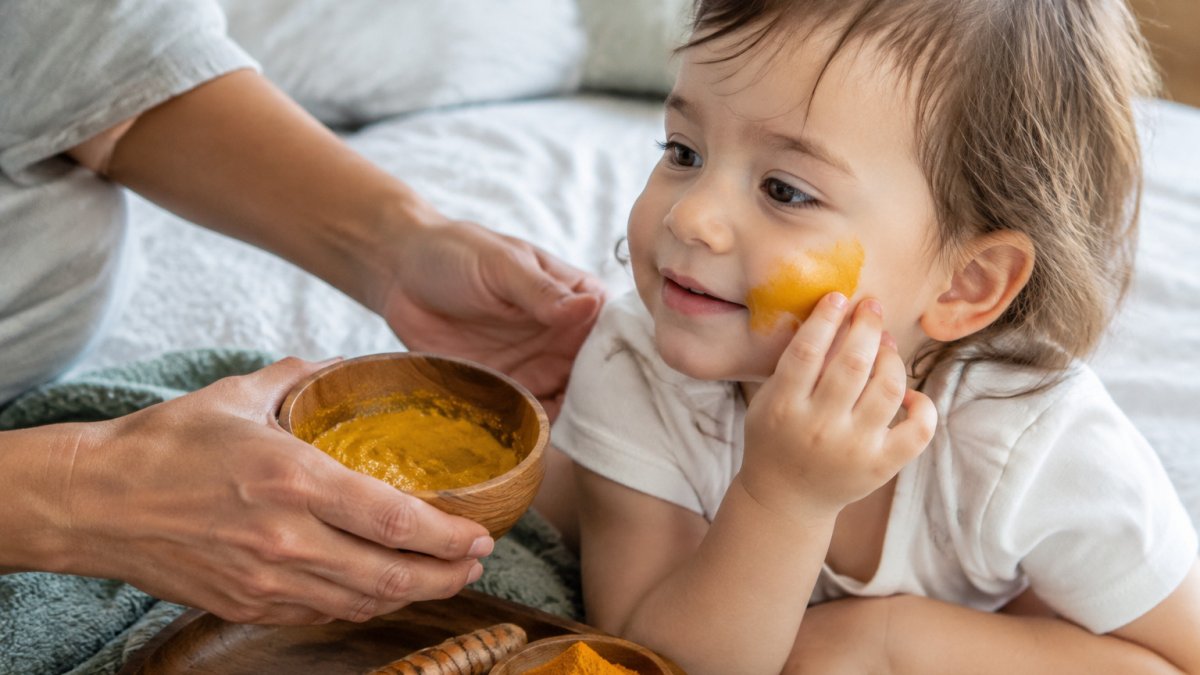
Watch out: never apply neat turmeric powder directly to a toddler's skin. It can stain, sting, and trigger contact dermatitis.
How to Patch Test Skincare on a Toddler
A patch test is a small, controlled trial of a product on one tiny area of skin before broader use.

- Choose a small area on the inner forearm or behind the knee.
- Wash and dry the skin gently.
- Apply a pea-sized amount.
- Leave it uncovered and let it absorb.
- Watch for redness, swelling, or itching over 24 to 48 hours.
- Stop immediately if you see any reaction.
Do not test on broken skin, near the eyes, or on the face. Testing too much product at once makes it hard to tell what caused a reaction.
Before trying any turmeric product on your toddler, follow these patch-test steps.
| Step | What to do |
|---|---|
| 1 | Choose a small area on inner forearm or behind knee |
| 2 | Wash and dry the skin gently |
| 3 | Apply a pea-sized amount |
| 4 | Leave it uncovered and let it absorb |
| 5 | Watch for redness, swelling, or itching over 24 to 48 hours |
| 6 | Stop immediately if you see any reaction |
Turmeric Allergy Symptoms on Skin and What to Do Next
Watch for these signs where the product was applied:
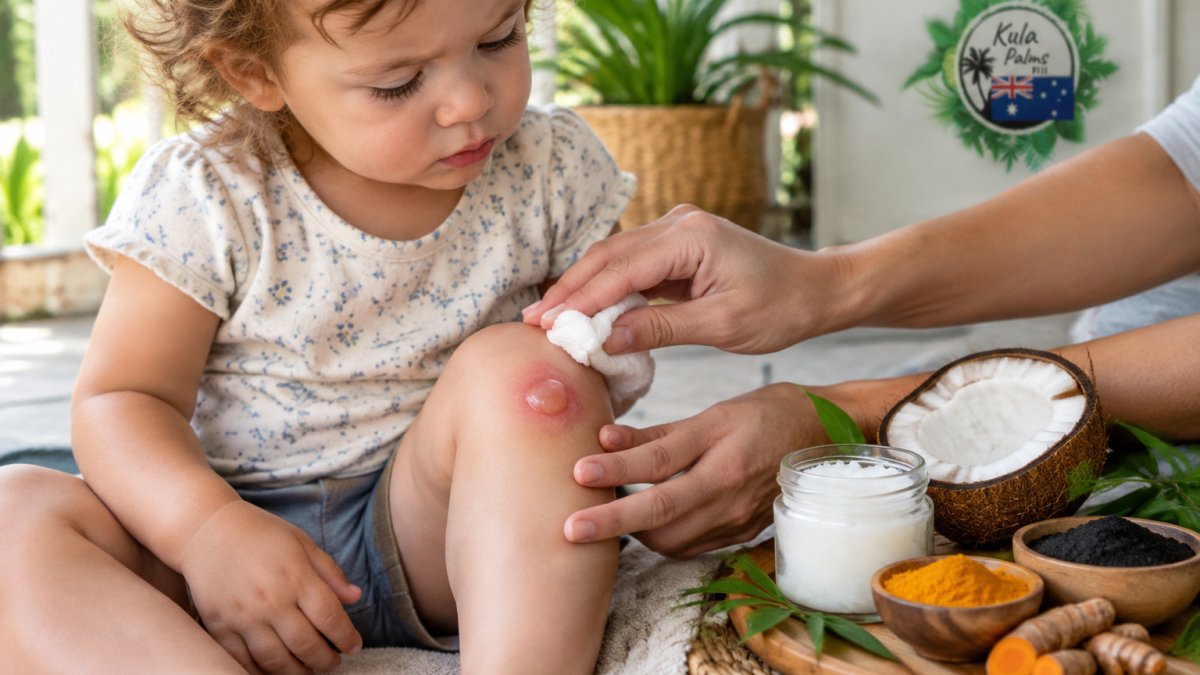
- Redness, warmth, or a blotchy rash.
- Itching, rubbing, or fussiness around the area.
- Dry, scaly, or cracked patches.
- Small bumps, weeping, or blisters in severe reactions.
- Swelling of the lips, eyelids, or face, uncommon but urgent.
- Stop the product immediately. Do not reapply to 'see if it settles'.
- Rinse gently with lukewarm water and a fragrance-free, soap-free cleanser. Avoid hot water and scrubbing.
- Pat dry and leave the area uncovered.
- Apply a cool compress for a few minutes at a time to calm itching.
- Keep nails short and discourage scratching; a light cotton cover at night can help.
- Note what you used, product name, amount, and how long it was on the skin, so you can describe it accurately if you need advice.
Seek advice from a pharmacist, your child's GP, or a nurse-on-call service if the rash is spreading, blistering, weeping, or not improving after two to three days; treat facial swelling, fever, or distress as urgent. For general calming steps, see our guide on how to soothe itchy skin fast.
Parents often blame turmeric when the real trigger is a fragrance, essential oil, or preservative in the same formula, so read the whole ingredient list.
Natural Skincare Ingredients for Toddlers: What to Look For
The word 'natural' tells you very little about safety for a toddler. A botanical extract can be as irritating as a synthetic one, and 'fragrance-free' and 'unscented' are not the same claim. Judge the whole formula against your child's age and skin maturity, not just whether turmeric is listed.
Start with the ingredient list, in order. Ingredients are listed by weight, so the first few names tell you most of the story. A short list, roughly ten ingredients or fewer for a leave-on product, usually means fewer potential irritants.
- Added fragrance and parfum, including 'natural' fragrances, a leading cause of contact dermatitis in children.
- Essential oils such as tea tree, lavender, peppermint, eucalyptus, and citrus oils, a recognised irritation and allergy risk on delicate skin.
- Harsh preservatives such as methylisothiazolinone (MI or MIT), associated with allergic reactions.
- Dyes, alcohol (ethanol), and exfoliating acids (AHA, BHA), unnecessary and potentially irritating on toddler skin.
- Neat spice powders, turmeric, cinnamon, and chilli, used as the main active rather than a trace ingredient.
Match the product to your child's age and skin. A toddler's skin is still maturing, so an adult product, even a 'gentle' one, may be too concentrated. For everyday dryness, a plain emollient or a single-ingredient plant oil such as virgin coconut oil is often the simplest starting point; our pure virgin coconut oil is one example. For facial care, our article on the best gentle face oils for sensitive skin covers ingredients chosen for delicate barriers.
Be sceptical of benefit claims. Traditional use of turmeric on skin is long-standing, but evidence for concentrated topical turmeric in young children is limited. Treat products promising to 'fix' eczema, rashes, or uneven skin tone with caution; a cosmetic is not a treatment for a medical skin condition.
Have a safe alternative ready. For dryness, mild irritation, or nappy-area redness, a fragrance-free emollient, a plain barrier cream, or a colloidal-oatmeal bath is a better-evidenced first step than a spice-based home remedy. If a concern persists or worsens, a pharmacist or GP can advise.
If you do choose a turmeric product, look for one that names turmeric clearly, keeps it as a minor ingredient, and pairs it with a simple, fragrance-free base. Our turmeric soap is made with raw turmeric and pure coconut oil, and the patch-test steps above still apply before first use.
Toddler skin deserves care that is both natural and cautious. At Kula Palms, we make small-batch, herbal-infused skincare built on pure virgin coconut oil, with raw turmeric formulations designed to soothe and support skin gently. Every bar is made with 100% natural ingredients, so you know exactly what you are putting on your child's skin. Get started with Kula Palms and give your toddler gentle, plant-based care you can trust.
Frequently Asked Questions
Can turmeric cause a skin reaction in toddlers?
If breathing, facial swelling or widespread hives occur, seek urgent medical advice.
Should turmeric skincare be used on broken or irritated skin?
For persistent or weeping skin conditions, see your GP or a dermatologist before trying any natural remedy.
Can turmeric stain a toddler's skin or clothes?
Raw turmeric can leave a yellow tint on skin and fabric, so dress your toddler in older clothes during use.